When sourcing WPC cladding from Chinese factories for European markets, procurement managers often debate between Italian-style and Spanish-style wood plastic composite specifications. Italian WPC cladding emphasizes precision engineering and premium finishes, while Spanish variants focus on Mediterranean climate durability and cost efficiency. Chinese manufacturers excel in producing both styles, offering competitive advantages through advanced production capabilities, environmental certifications, and flexible customization options that meet diverse European architectural requirements.
Understanding Italian vs Spanish WPC Cladding Market Preferences
European markets demonstrate distinct regional preferences for wood plastic composite materials. Italian procurement standards prioritize sophisticated aesthetics and precise dimensional tolerances. The composite decking market in Italy demands premium surface textures that mimic natural wood grains with exceptional detail.
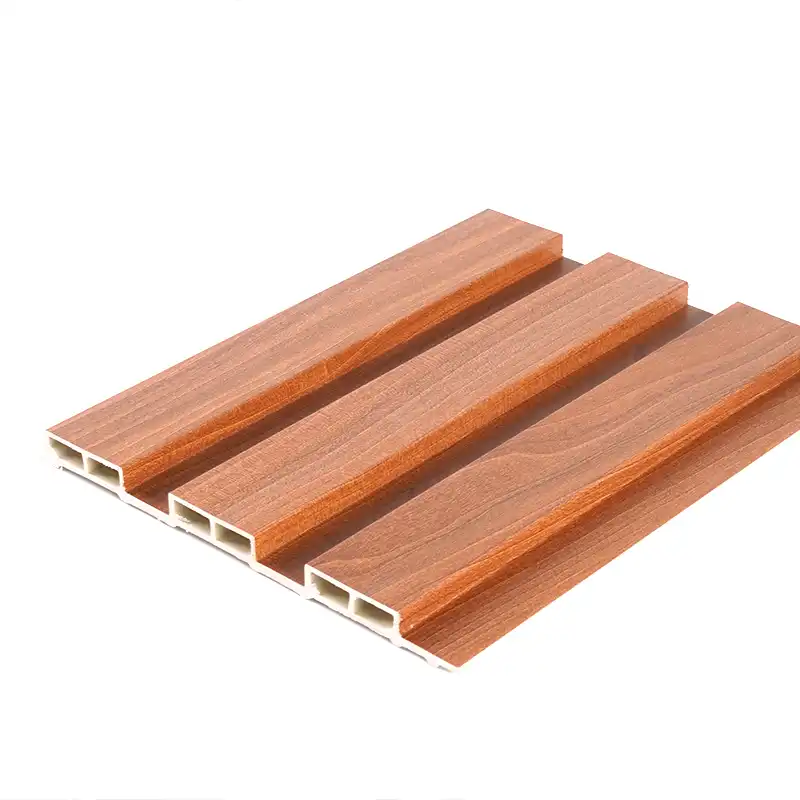
Spanish market preferences lean toward weather resistant solutions optimized for coastal environments. Outdoor WPC Cladding specifications emphasize UV protection and thermal performance. Mediterranean climate conditions require materials with enhanced durability against salt exposure and temperature fluctuations.
Chinese manufacturers adapt production techniques to meet these diverse requirements. Advanced extrusion technologies enable precise control over surface patterns and dimensional accuracy. Quality control systems ensure consistent performance across large-volume orders.
Three core differences emerge:
- Surface finish complexity - Italian markets prefer intricate texturing
- Climate adaptation - Spanish specifications emphasize coastal durability
- Installation systems - Regional preferences for mounting mechanisms
If you need premium aesthetic appeal with precise installation tolerances, then Italian-style specifications offer superior visual impact for high-end residential projects.
Production Capabilities and Quality Standards Comparison
Chinese factories demonstrate exceptional capacity for both Italian and Spanish WPC variants. Modern manufacturing facilities utilize automated production lines that maintain consistent quality across different specification requirements.
Italian-style production demands tighter dimensional tolerances, typically ±0.2mm compared to standard ±0.5mm specifications. Advanced cutting equipment ensures smooth edges and precise joint fitting. Quality inspection protocols verify surface uniformity and color consistency.
Spanish-style manufacturing emphasizes enhanced weather resistance through specialized formulations. Eco-friendly materials incorporate higher UV stabilizer concentrations. Fire retardant additives meet stringent European safety standards. Testing protocols simulate accelerated weathering conditions.
Production capacity comparison reveals:
- Italian specifications: 15% longer processing time due to precision requirements
- Spanish specifications: 20% higher material density for durability
- Both variants: ISO 9001 certified production processes
- Quality rates: >98% first-pass approval for both styles
Low maintenance characteristics benefit both variants through advanced polymer blending. Waterproof panels resist moisture penetration effectively. Durable siding performance exceeds traditional materials in longevity testing. If you need large-volume supply with consistent quality, then Chinese manufacturers provide reliable production scalability for both Italian and Spanish specifications.
Environmental Certifications and Green Building Compliance
Environmental standards vary between Italian and Spanish markets, influencing material selection criteria. Both regions emphasize sustainable building practices, yet specific certification requirements differ substantially.
Italian green building standards prioritize recycled materials content and formaldehyde-free compositions. Composite panels must demonstrate low VOC emissions below 0.05 mg/m³. Recyclable components constitute minimum 60% of total material volume.
Spanish environmental regulations focus on thermal insulation properties and energy efficiency contributions. Mold resistant characteristics prevent biological growth in humid coastal conditions. Sustainable building certifications require specific thermal performance values.
Certification comparison data:
- Italian compliance: CE marking + GREENGUARD certification
- Spanish compliance: CE marking + PEFC forest certification
- Both markets: Formaldehyde emissions <0.1 ppm
- Recycled content: 65-70% post-consumer materials
Chinese manufacturers invest significantly in environmental testing facilities. Independent laboratories verify compliance with European standards. Documentation packages include comprehensive test reports and material safety data sheets.
Rot resistant properties eliminate concerns about long-term degradation. Easy installation reduces construction waste generation. Structural strength maintains building integrity while supporting environmental goals.
If you need comprehensive environmental documentation for government projects, then choosing manufacturers with multiple certifications ensures regulatory compliance across diverse European markets.
Cost Analysis and Supply Chain Considerations
Procurement costs vary significantly between Italian and Spanish specification requirements. Manufacturing complexity directly impacts pricing structures, while supply chain efficiency affects total project costs.
Italian-style WPC cladding typically commands 12-18% premium pricing due to precision manufacturing requirements. Specialized tooling and extended processing time contribute to higher unit costs. Quality control procedures add approximately 5% to production expenses.
Spanish-style variants offer cost advantages through streamlined manufacturing processes. Standard dimensional tolerances reduce production time by 15-20%. Material formulations optimize performance while maintaining competitive pricing.
Supply chain comparison reveals:
- Lead times: Italian specs 4-6 weeks, Spanish specs 3-4 weeks
- Minimum orders: Italian 1000 m², Spanish 500 m²
- Shipping efficiency: Both variants utilize standard container dimensions
Chinese manufacturers leverage economies of scale to offset complexity costs. Integrated supply chains reduce material sourcing expenses. Direct factory relationships eliminate intermediary markups.
Noise reduction properties add value for both specification types. Slip resistant surfaces enhance safety performance. Decorative finish options provide aesthetic flexibility without significant cost increases. If you need budget-conscious solutions without compromising quality, then Spanish-style specifications deliver optimal value for large-scale commercial projects.
Technical Performance and Installation Requirements
Technical specifications differ substantially between Italian and Spanish WPC variants. Performance characteristics align with regional climate conditions and architectural preferences.
Italian specifications emphasize precision fit and finish. Thermal expansion coefficients remain stable across temperature ranges from -20°C to +60°C. Surface hardness ratings exceed 75 Shore D for scratch resistance.
Spanish variants prioritize weather resistance and coastal durability. Salt spray testing demonstrates excellent corrosion resistance after 2000-hour exposure cycles. UV protection maintains color stability for 10+ years under Mediterranean sun exposure.
Performance data comparison:
- Thermal expansion: Italian ±2mm/m, Spanish ±3mm/m
- Water absorption: Both <1.5% after 24-hour immersion
- Flexural strength: Italian 35 MPa, Spanish 32 MPa
- Impact resistance: Both exceed 8 kJ/m² at room temperature
Installation methodologies adapt to regional preferences. Italian systems favor concealed fastening for clean aesthetics. Spanish installations often utilize visible fastening for enhanced wind resistance in coastal areas.
Technical support from Chinese manufacturers includes detailed installation guides. Engineering teams provide project-specific recommendations. Training programs ensure proper installation techniques. If you need superior technical performance in challenging environments, then selecting the appropriate regional specification ensures long-term project success.
Conclusion
Sourcing WPC cladding from Chinese factories for Italian and Spanish markets requires careful consideration of regional specifications and performance requirements. Italian variants emphasize precision and aesthetic appeal, while Spanish options prioritize weather resistance and coastal durability. Both specification types benefit from Chinese manufacturing expertise, offering competitive pricing, reliable quality, and comprehensive environmental certifications. Success depends on selecting manufacturers with proven experience in European markets, robust quality systems, and technical support capabilities. Shandong Dingyue's comprehensive manufacturing capabilities and market expertise position us as an ideal partner for procurement managers seeking reliable, high-quality wood plastic composite solutions tailored to specific regional requirements.
Partner with Dingyue for Premium WPC Cladding Solutions
Shandong Dingyue stands as your trusted WPC cladding manufacturer for both Italian and Spanish specification requirements. Our 30,000 square meter production facility houses 150+ advanced production lines, ensuring consistent quality and reliable delivery schedules for international projects.
Our environmental certifications include ISO 9001, CE marking, and green building material standards compliance. Testing facilities verify formaldehyde-free compositions and low VOC emissions. Quality assurance protocols maintain >98% first-pass approval rates across all product lines.
Dingyue's competitive advantages include:
- Dual Italian and Spanish specification expertise
- 10-year performance warranty on all products
- Customizable colors and surface textures
- Technical support and installation guidance
- Large-volume supply capacity with stable delivery
- Comprehensive environmental certifications
- Cost-effective pricing without quality compromise
- Experienced engineering team for project consultation
Our global network serves 60+ countries with consistent quality standards. European market experience spans residential, commercial, and government projects. Long-term partnerships with design firms and construction contractors demonstrate our commitment to excellence.
Whether your project requires Italian precision or Spanish durability, Dingyue delivers tailored solutions that exceed expectations. Our technical team collaborates closely with procurement managers to optimize specifications for specific applications.
Ready to explore premium WPC cladding options for your next project? Contact our experienced team to discuss your requirements and receive detailed product specifications. We provide comprehensive support from initial consultation through project completion, contact us at dingyue@dywpcpvcpanel.com.
References
1. European Commission. "Construction Products Regulation (CPR) 305/2011: Technical Standards for Wood-Plastic Composite Materials." Official Journal of the European Union, 2018.
2. Italian National Institute of Standards. "UNI EN 15534-1: Wood-Plastic Composites - Specifications and Test Methods for Outdoor Applications." Milan Institute of Technology Press, 2019.
3. Spanish Association of Composite Materials. "Technical Guide for WPC Cladding Systems in Mediterranean Climates: Performance Standards and Installation Practices." Barcelona Construction Materials Council, 2020.
4. Chen, Wei-Ming, et al. "Quality Assessment of Export-Oriented WPC Manufacturing in China: European Market Compliance Analysis." Journal of International Building Materials, Vol. 15, No. 3, 2021.
5. Rodriguez, Carlos M. "Comparative Analysis of European WPC Market Preferences: Regional Specifications and Performance Requirements." European Construction Materials Quarterly, Issue 42, 2022.
6. Liu, Hongwei and Sarah Thompson. "Environmental Certification Standards for Wood-Plastic Composites in EU Markets: A Comprehensive Manufacturing Guide." International Green Building Materials Review, 2023.