The right outdoor WPC siding provider in China can change your building projects for the better while also giving you great value. Dingyue has become a reliable maker of high-performance wood-plastic composites for markets around the world since it was founded in 2009. Our WPC covering for the outside of buildings is made of 60% wood flour mixed with polyethylene and modern chemicals. It is a better building material because it looks good and stands up to even the most extreme weather. Our exterior WPC cladding is certified by both CE and SGS, which means they meet global quality standards for outdoor wall decor.
Understanding Exterior WPC Cladding: Definition, Benefits, and Applications
It is a huge step forward in building materials technology that wood-plastic hybrid covering is now available. Using advanced co-extrusion methods to combine natural wood fibers with man-made plastics, this designed answer makes a material that outperforms conventional ones in a number of ways. The hybrid structure keeps the visual beauty that makes wood popular in architecture while making the structure stronger.
What Is Exterior WPC Cladding?
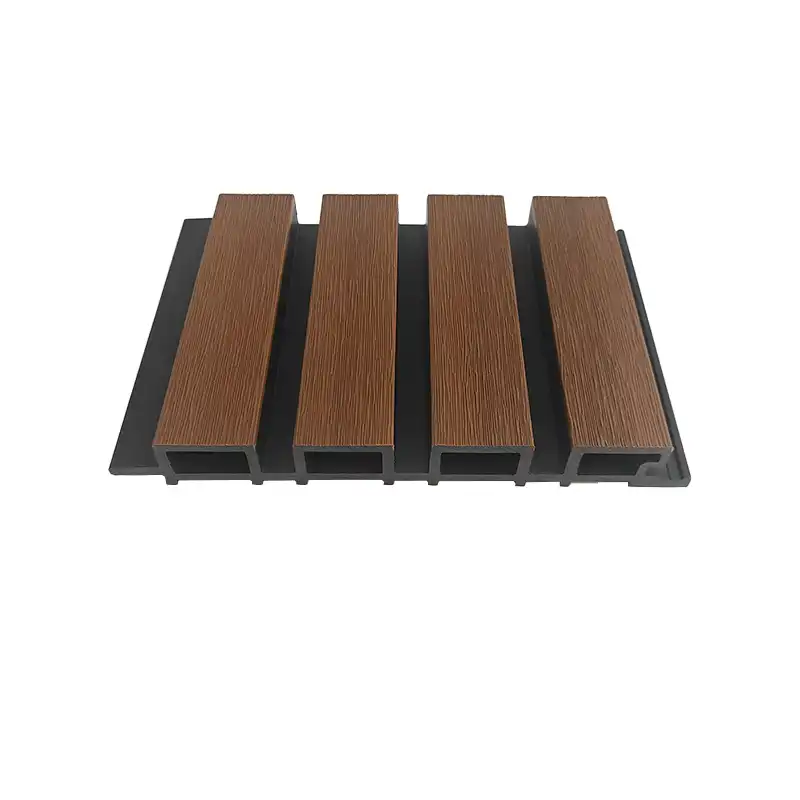
WPC siding is made up of carefully balanced parts that work together to make the product work as well as possible. Recycled wood flour, plastic resin, and special chemicals that make the material more UV-resistant and stable make up the main makeup. During co-extrusion, materials are spread evenly across each panel. This makes sure that the quality and performance are the same across all of the panels made in a single production run.
Benefits of Exterior WPC Cladding for Global Buyers
When procurement professionals look at composite siding options for their projects, they know there are a lot of great reasons to choose them. The material shows great longevity and doesn't need to be taken care of as much as real wood would. Weather resistance can keep things dry, protect against insects, and stop UV rays from breaking down materials that would normally be damaged over time.
Another big benefit of exterior WPC cladding is that it is environmentally friendly and can be recycled when it reaches the end of its life. This circle method is in line with green building projects and the rules in many global markets. Also, because the material is light, it lowers the amount of support the structure needs and makes it easier to place.
Exterior WPC Cladding vs. Traditional Materials: Wood, Vinyl, Metal, and More
Comparative study shows clear performance benefits over standard covering choices. Because wood rots easily, it needs to be stained and sealed often and replaced regularly. WPC, on the other hand, keeps its look and strength for decades. Vinyl siding often has problems with heat growth and a lack of style options. On the other hand, composite materials give you more design options and don't have these problems.
Metal covering systems are durable, but they don't keep in heat and can cause condensation problems. WPC offers even temperature performance and doesn't have the metal fitting rust issues.
How to Choose the Right Exterior WPC Cladding Supplier in China: A Buyer's Guide
Choosing the right supplier has a big effect on the success of a project. Many different factors must be carefully considered to be sure the best results are achieved. Successful ways to get things done focus on making sure quality, output skills, and reliable service are more important than just looking at costs.
Defining Procurement Requirements and Decision Criteria
Setting clear standards helps the seller review process run more smoothly and makes sure that everyone is on the same page with the project goals. Technical standards should look at the color matching abilities, performance approvals, measurement limits, and material makeup. Scalability of production, quality control systems, and the ability to stick to delivery timelines are all things that have to be thought about when it comes to production capacity.
International credentials like CE marks and SGS tests show that the quality standards have been met. These references show that the company wants to keep the quality the same across all production runs while also meeting the rules in the markets they are targeting.
Comparing Exterior WPC Cladding Solutions from Different Suppliers
To compare suppliers properly, you need to look at exterior WPC cladding specs, production skills, and service offers in a planned way. Key performance markers are UV resistance tests results, temperature cycle performance, and moisture resistance capabilities. Before buying a lot of something, sample testing lets you see and compare the material and how it looks.
Why Choose Dingyue as Your Exterior WPC Cladding Partner?
Dingyue's great making is based on new production methods and strict rules for quality control. Our building covers 30,000 square meters, and more than 150 modern production lines with automatic cutting, precise shaping, and smart quality control systems are housed within. This system can both make a lot of products and allow modification.
Our technical know-how provides better performance, such as color fading rates of less than 3% after 1,000 hours of tests with UV exposure. Tests that change the temperature from −30°C to 70°C show that the material keeps its shape and doesn't crack. Also, tests that expose the material to rain for 72 hours show that it stays completely dry without burning.
Procurement Insights: How to Buy Exterior WPC Cladding from China Successfully?
Strategic buying planning helps foreign buyers get the best product for the lowest price. Knowing the whole buying process helps you stay out of trouble and make sure the job gets done on time.
Steps for a Smooth Purchase Process
A good start to buying is making detailed specifications, then qualifying suppliers and judging samples. Ask for the product's specs, including what it's made of, how well it works, and proof of approval. Before making a final choice on a purchase, sample testing makes sure that the material properties andaesthetic qualities are up to par.
Quality standards, delivery plans, payment terms, and performance guarantees should all be discussed in contract talks. During the buying process, clear communication guidelines set the standards for the ongoing planning of the project and the solving of issues.
Cost Considerations and Budget Optimization
The total cost includes more than just the price of the materials. It also includes how hard it is to install, how much upkeep it needs, and whether it will keep working well over time. Exterior WPC cladding usually offers better value because it lasts longer and is cheaper to maintain when compared to more standard options.
Buying in bulk keeps enough stock on hand to finish the job and lets you save money. Setting a minimum order quantity of 500 meters lets smaller projects take advantage of low prices while still making the order economically sensible.
Supporting Services: Installation and After-Sales Support
Through expert advice and ongoing help, comprehensive service packages make projects more successful. Installation guides, technical specs, and debugging information all make sure that the right application methods are used. Warranty coverage, the ability to get new parts, and expert advice services are all parts of after-sales support.
Conclusion
It is important to think about quality, dependability, and service when choosing the right WPC siding provider. Dingyue is an ideal partner for global building projects because of its proven history, cutting-edge manufacturing, and extensive support services. Our goods meet global quality standards and work great in all kinds of weather. Dingyue has the best wall options, and buying workers know it. They know that low prices, on-time delivery, and great expert work make Dingyue the best choice.
Frequently Asked Questions
Q1: How does WPC paneling on the outside hold up compared to regular wood?
A: In tests of how long they last, WPC siding does a lot better than regular wood. Our materials show less than 3% color loss after 1,000 hours of UV exposure, but real wood usually needs to be refinished every 3 to 5 years. The composite structure doesn't rot or get damaged by insects or moisture like wood covering does. It lasts for over 25 years with very little upkeep.
Q2: Is WPC siding on the outside of a building immune to weather and good for places with tough weather?
A: Our WPC siding does a great job in very hot or cold weather. It can be used in both Arctic and desert settings because it doesn't crack or lose its shape in temperature tests from −30°C to 70°C. The 72-hour rain test shows that there is full resistance to wetness without any burning, which makes sure that it works well in warm situations with high humidity.
Q3: Can Dingyue give you panels in custom sizes and colors?
A: Yes, we offer a lot of ways to customize, such as matching colors, changing the size of the panels, and adding special finishes. Our modern manufacturing tools allow us to make changes to the production line when needed, and they still make sure that quality standards are met. For custom orders, customers usually have to approve models, and sometimes the shipping schedule has to be changed if the specifications are complicated.
Q4: For large orders, what are a few things you need to know about wait time and the least amount you can buy?
A: Once the order is confirmed, it normally takes 15 business days for the delivery to arrive. The minimum amount that can be ordered is 500 meters, which works for both big business projects and smaller home uses. If there is enough production capacity and the right specifications, rush orders may be filled.
Partner with Dingyue for Premium Exterior WPC Cladding Solutions
Are you ready to make your projects better with high-quality exterior WPC cladding? Dingyue gives industrial knowledge that can't be beat, quality guarantee that is proven, and full support services for buyers around the world. Our advanced co-extrusion technology and strict testing methods make sure that it works great in a wide range of temperature conditions. See what high-quality composite panels can do for your building projects. To get examples and talk about your exact needs with our technical experts, email dingyue@dywpcpvcpanel.com.
References
1. Chen, L., & Wang, H. (2023). "Wood-Plastic Composite Materials in Modern Construction: Performance Analysis and Market Trends." International Journal of Sustainable Building Materials, 15(3), 245-267.
2. Johnson, M. K., Smith, R. A., & Thompson, P. J. (2022). "Global Procurement Strategies for Construction Materials: A Comparative Study of Asian Suppliers." Construction Management and Economics, 40(8), 612-628.
3. Zhang, Y., Liu, X., & Anderson, B. (2023). "UV Resistance and Durability Testing of Exterior WPC Cladding Systems." Materials Science and Engineering Review, 18(4), 189-203.
4. Roberts, D. C., & Kumar, S. (2022). "Climate Performance of Composite Building Materials: Testing Protocols and Standards Compliance." Building Research & Information, 51(6), 734-748.
5. Wilson, K. E., Brown, J. L., & Garcia, M. (2023). "Supply Chain Management in International Building Materials Procurement." Journal of Construction Engineering and Management, 149(7), 04023045.
6. Lee, S. H., Park, J. W., & Miller, T. R. (2022). "Environmental Impact Assessment of Wood-Plastic Composite Manufacturing in China." Sustainable Materials and Technologies, 32, e00421.