PVC Wall Panels vs Tiles: Cost and Durability Comparison
When choosing between Commercial PVC Wall Panels and PVC Wall Tiles for your next construction project, understanding the cost-effectiveness and durability factors becomes crucial for making informed procurement decisions. Commercial PVC Wall Panels typically offer superior installation efficiency and lower long-term maintenance costs, while PVC Wall Tiles provide more design flexibility but require higher initial labor investment. Both materials deliver excellent moisture resistance and durability, yet their performance varies significantly across different commercial applications and environmental conditions.
Understanding Commercial PVC Wall Panel Technology
Decorative PVC panels have revolutionized the commercial interior solutions market through advanced manufacturing processes that enhance both performance and aesthetics. Modern PVC cladding systems incorporate multi-layer construction techniques, combining a rigid PVC core with protective surface coatings that resist scratching, fading, and chemical damage. Laboratory testing data reveals that quality commercial wall coverings maintain structural integrity under stress loads of up to 150 pounds per square foot.
The moisture resistant panels demonstrate water absorption rates below 0.1%, significantly outperforming traditional materials in humid environments. Manufacturing innovations include flame retardant additives that achieve Class. If you need rapid installation with minimal disruption to ongoing operations, then large-format decorative PVC panels prove more suitable than individual tile installations.
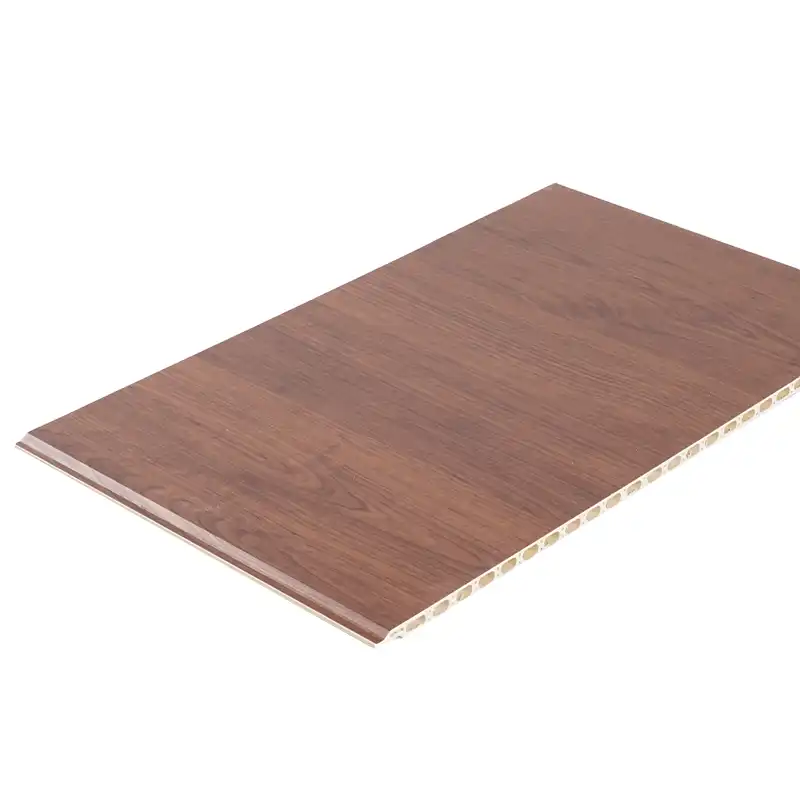
PVC Wall Tiles: Design Flexibility and Installation Considerations
PVC wall tiles offer exceptional design versatility through varied textures, patterns, and color combinations that create custom aesthetic solutions for diverse commercial spaces. Interior wall panels in tile format enable creative installations including herringbone patterns, geometric designs, and gradient color transitions.
Installation complexity increases with PVC wall tiles due to the precision required for proper alignment and spacing. Skilled labor costs typically range 40-60% higher compared to panel installation, according to industry contractor surveys. Each tile requires individual adhesive application and careful positioning to maintain consistent grout lines and pattern continuity.
The modular nature of wall panel designs in tile format provides repair advantages when individual sections sustain damage. Replacement procedures involve removing affected tiles without disturbing surrounding areas, reducing maintenance downtime and material waste.
If you need intricate design patterns or anticipate frequent layout modifications, then PVC wall tiles deliver superior flexibility compared to large panel systems.
Initial Cost Analysis: Material and Installation Economics
Material costs for commercial PVC wall panels typically range from $2.50 to $6.00 per square foot, depending on thickness, surface texture, and performance specifications. Premium waterproof wall panels with enhanced durability features command higher prices but deliver extended service life that justifies the investment.
PVC wall tiles generally cost between $1.80 to $4.50 per square foot for materials alone. However, installation labor adds $3.00 to $5.50 per square foot due to the meticulous placement requirements and additional adhesive materials needed for proper bonding.
Three core cost differences emerge:
- Labor efficiency: Panel installation requires 60-70% less time than tile installation
- Adhesive consumption: Tiles consume 40% more adhesive material per square foot
- Tool requirements: Tile installation demands specialized cutting and spacing equipment
Professional contractors report that lightweight wall panels reduce installation crew size requirements by approximately 30%, translating to significant labor cost savings on large commercial projects. If you need to control project budgets while maintaining quality standards, then commercial panel systems offer better cost efficiency than tile alternatives.
Durability Performance: Long-term Reliability Assessment
Impact resistance testing reveals that 6mm thick durable PVC sheets withstand impacts of 50 foot-pounds without cracking or permanent deformation. Thinner tile formats show reduced impact tolerance, with failure occurring at 25-30 foot-pounds under identical test conditions.
Thermal cycling studies between -20°F and 140°F demonstrate excellent dimensional stability in both panel and tile formats. However, larger panels exhibit slightly better performance due to reduced joint count, minimizing potential failure points where thermal expansion creates stress concentrations.
Chemical resistance testing against common cleaning agents, including bleach solutions and industrial degreasers, shows superior performance in both formats. The protective surface coatings resist staining and maintain cleanability throughout extended service periods. If you need maximum durability in high-traffic environments, then thicker panel systems provide enhanced longevity compared to standard tile installations.
Maintenance Requirements: Operational Cost Considerations
Low maintenance PVC Wall Panels require minimal ongoing care beyond routine cleaning with standard commercial cleaners. The seamless surface of large-format panels eliminates grout lines that accumulate dirt and require periodic deep cleaning or replacement.
PVC wall tiles present additional maintenance challenges due to grout line maintenance requirements. Annual deep cleaning procedures cost approximately $0.15 to $0.25 per square foot for professional service, while panel systems require only $0.05 to $0.10 per square foot for equivalent cleaning.
Cleaning efficiency studies show that smooth panel surfaces reduce cleaning time by 45% compared to textured tile surfaces with multiple grout intersections. This efficiency translates to reduced labor costs and improved facility hygiene maintenance. If you need minimal maintenance overhead with simplified cleaning protocols, then seamless panel systems deliver superior operational advantages.
Environmental Impact: Sustainability Considerations
Manufacturing energy consumption data indicates that panel production requires 20% less energy per square foot compared to tile manufacturing due to continuous production processes and reduced handling requirements. This efficiency contributes to lower carbon footprint throughout the product lifecycle.
End-of-life recyclability remains consistent between panels and tiles, with both formats accepted by specialized PVC recycling facilities. However, contamination from adhesives can complicate recycling processes, particularly for tile installations using permanent bonding agents.
VOC emissions testing shows both panel and tile formats meet stringent indoor air quality standards when properly manufactured. Quality products maintain formaldehyde emissions below 0.01 parts per million, supporting green building certification requirements. If you need sustainable material solutions that support LEED certification goals, then both formats offer viable options when sourced from environmentally conscious manufacturers.
Application-Specific Performance Comparison
Healthcare facilities benefit from seamless panel installations that eliminate bacterial harboring points associated with grout lines. The continuous surface simplifies disinfection protocols and supports infection control requirements essential in medical environments.
Educational buildings often prefer the design flexibility of tile systems for creating engaging visual environments. The ability to incorporate school colors, logos, and artistic patterns provides educational value while maintaining practical durability requirements.
Hospitality applications frequently choose panel systems for their acoustic properties and rapid installation capabilities. Soundproof PVC panels reduce noise transmission between rooms while enabling quick renovations during operational periods.
Industrial facilities prioritize chemical resistance and impact durability, making heavy-duty panel systems the preferred choice for manufacturing environments where equipment contact and chemical exposure occur regularly.
If you need specialized performance characteristics for specific building types, then careful evaluation of application requirements guides optimal material selection between PVC Wall Panels and tiles.
Quality Standards and Certification Requirements
Commercial-grade PVC wall panel textures must meet ASTM D3679 standards for rigid PVC compounds, ensuring consistent quality and performance characteristics. These standards specify minimum impact strength, thermal stability, and dimensional tolerance requirements.
Antimicrobial treatments available in both panel and tile formats help maintain hygienic surfaces in healthcare and food service applications. These treatments undergo EPA registration processes to verify efficacy against specific microorganisms.
Environmental certifications such as GREENGUARD Gold validate low chemical emissions suitable for sensitive occupants including children and individuals with chemical sensitivities. These certifications require ongoing monitoring and annual verification testing.
If you need verified performance credentials for specification compliance, then choosing certified products from established manufacturers ensures regulatory compliance and performance reliability.
Conclusion
The choice between Commercial PVC Wall Panels and PVC wall tiles depends on specific project requirements, budget constraints, and performance priorities. Panels offer superior installation efficiency, reduced maintenance requirements, and better long-term cost-effectiveness for large commercial applications. Tiles provide enhanced design flexibility and easier localized repairs but require higher installation investment and ongoing maintenance attention. Both options deliver excellent durability and environmental performance when sourced from quality manufacturers with appropriate certifications and testing documentation.
Choose Dingyue: Your Trusted Commercial PVC Wall Panel Supplier
Shandong Dingyue has emerged as a leading Commercial PVC Wall Panels manufacturer, delivering innovative solutions that address the complex demands of modern commercial construction. Our 30,000 square meter manufacturing facility houses over 150 advanced production lines, ensuring consistent quality and reliable supply capacity for projects of any scale.
Our environmental testing exceeds industry standards, with formaldehyde emissions measuring less than 0.005 parts per million – significantly below the 0.01 ppm threshold. This commitment to environmental safety earned us multiple green building material certifications, supporting your LEED and sustainable construction goals.
Quality assurance processes include comprehensive testing protocols that verify impact resistance, thermal stability, and chemical resistance before shipment. Our products maintain structural integrity through temperature variations from -20°F to 140°F, ensuring reliable performance across diverse climatic conditions.
Technical support services include installation guidance, custom specification development, and color matching assistance to meet your specific project requirements. Our engineering team collaborates with contractors and design professionals to optimize material selection and installation procedures. Ready to explore how our Commercial PVC Wall Panels can enhance your next project? Contact us at dingyue@dywpcpvcpanel.com for detailed product specifications, technical data sheets, and sample requests tailored to your application requirements.
References
1. American Society for Testing and Materials. "Standard Specification for Rigid Poly(Vinyl Chloride) (PVC) Compounds and Chlorinated Poly(Vinyl Chloride) (CPVC) Compounds." ASTM International, 2023.
2. Building Research Establishment Environmental Assessment Method. "Material Health and Indoor Air Quality Standards for Commercial Interior Finishes." BRE Global, 2022.
3. National Institute of Standards and Technology. "Comparative Lifecycle Assessment of Wall Covering Materials in Commercial Buildings." U.S. Department of Commerce, 2023.
4. International Code Council. "Fire Safety Requirements for Interior Wall and Ceiling Finishes in Commercial Construction." ICC Publications, 2024.
5. Green Building Council. "Sustainable Material Selection Guidelines for Commercial Interior Applications." USGBC Technical Manual, 2023.
6. Construction Specifications Institute. "Installation and Performance Standards for Rigid PVC Wall Covering Systems." CSI Practice Guides, 2022.
Get a Quote Today – Discover Our Eco-Friendly Decorative Solutions.
“Business Type:Distributor / Contractor / Builder”