Composite Tube Alternatives to Aluminum and Steel
In building and engineering, which are always changing fields, it is always hard to find new materials that work better and are also good for the earth. WPC Composite Tubes have appeared as a potential substitute for conventional materials like aluminum and steel. These handy tubes are made with plastic and wood flour, giving them a unique set of qualities that make them perfect for a lot of different uses. WPC Composite Tubes will be thoroughly discussed in this in-depth guide, and we'll look at why they're a growing favorite among architects, engineers, and builders.
Understanding WPC Composite Tubes: Composition and Properties
Before going over the benefits of WPC Composite Tubes compared to aluminum and steel, let's first go over what they are and how they are manufactured. This part will go into great detail about what these new materials are made of and what makes them special.
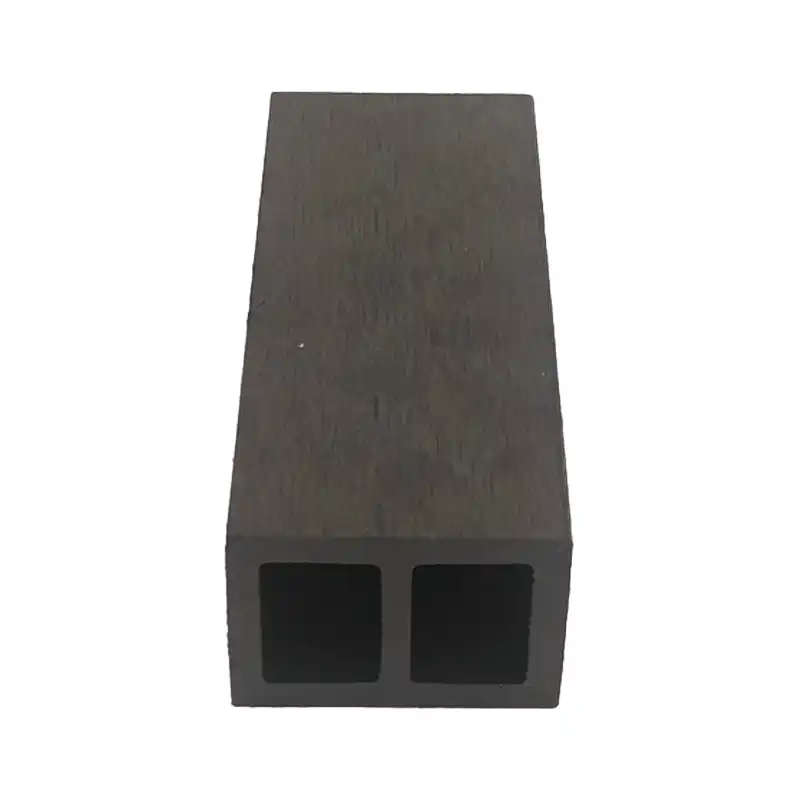
What are WPC Composite Tubes?
WPC Composite Tubes are new building materials that are made of wood and plastic, so they have the best traits of both materials. "WPC" stands for "Wood-Plastic Composite," which is what these tubes are made of. Usually, they're made from a mix of wood flour and thermoplastics, such as polyethylene (PE).
Our WPC Composite Tubes at Dingyue are made from an exact mix of 60% wood flour, polyethylene (PE), and carefully chosen chemical additives. This mixture is then put through a process involving very high temperatures and pressures to make a substance that has the look of wood but is more durable and functional.
The Manufacturing Process of WPC Composite Tubes
A complex procedure called co-extrusion is used to make WPC Composite Tubes. This approach makes it possible to make tubes with uniform quality and adjustable features. Here is a short summary of the steps used to make the product:
1. Getting the raw materials ready: Plastic pellets and wood flour are mixed with chemicals after being carefully measured.
2. Heating and melting: The mix is cooked so that it becomes a uniform liquid substance.
3. Extrusion: The die gives the shape of the tube to the material that is pushed through it when it is hot.
4. Cooling and shaping: The tube that was produced is cooled and shaped into the right length.
5. Surface treatment: This is an optional step that can be done to improve the look or performance of the item.
This co-extrusion method gives exact control over the tube's characteristics, which guarantees that the goods are always the same high quality and meet certain performance standards.
Key Properties of WPC Composite Tubes
WPC Composite Tubes have a wide range of qualities, making them useful for many different things. Some of the most important features are:
• Durability: Doesn't rot, decay, or get infested with bugs
• Weather resistance: Works great in all kinds of weather
• UV stability: Doesn't fade or break down in the sun
• Low maintenance: Needs less care than regular wood
• Eco-friendly: Can be recycled when they're done being used.
• Customizable: Can be made in different colors, textures, and finishes
• Dimensional stability: Changes in temperature cause very little expansion and contraction
Because of these qualities, WPC Composite Tubes are a good choice for many uses instead of older materials like metal and steel.
Advantages of WPC Composite Tubes over Aluminum and Steel
Let's look at why WPC Composite Tubes are becoming more popular as substitutes for aluminum and steel now that we've established what they are. This part will talk about the main reasons why WPC Composite Tubes are a great choice for many building and engineering projects.
Weight Reduction without Compromising Strength
WPC Composite Tubes have a great strength-to-weight ratio, which is one of their main benefits over aluminum and steel. WPC Composite Tubes can provide similar or even better strength at a lower weight than aluminum, which is known for its lightweight qualities. This feature is especially useful when it comes to cutting down on weight, like in the car or aircraft industries.
Because WPC Composite Tubes are lightweight, they can be:
• Easier to handle and install
• Cheaper to move
• Less general weight in the structures of houses and cars
• Better fuel economy in transportation
Superior Corrosion Resistance
Steel rusts easily and metal also corrodes in some settings, but WPC Composite Tubes are great at resisting rusting. Because of this feature, they are perfect for use in tough settings, like seaside areas, chemical plants, and underground uses. The corrosion resistance of WPC Composite Tubes translates to:
- Longer service life
- Reduced maintenance costs
- Improved safety in critical applications
- Consistent performance over time
Thermal and Electrical Insulation
WPC Composite Tubes are not metal tubes and insulate naturally. This trait has a number of benefits for different kinds of use:
• Better energy economy in building uses
• Lowered chance of electrical conductivity in some settings
• Makes it easier to stay warm and cool in outdoor chairs or playing equipment
• Could be used in electrical pipe systems
In many situations where metal tubes might present risks or problems, the insulation features of WPC Composite Tubes can result in energy savings and improved safety.
Applications and Performance of WPC Composite Tubes
WPC Composite Tubes have special features that make them useful in many different businesses and situations. Let's look at how well these new materials work in the real world and talk about some of their most popular uses in this part.
Outdoor Applications
WPC Composite Tubes are great for outdoor use because they are resistant to weather and last a long time. Some common outdoor uses are:
• railings and fencing
• gazebos and pergolas
• garden structures
• playground equipment
In these uses, WPC Composite Tubes are helpful in many ways:
• Doesn't absorb water, so it won't rot or swell
• Stays strong and colorful when exposed to sunlight
• Requires less care than wood or metal.
• Looks that can copy the roughness of real wood
For example, Dingyue's WPC Composite Tubes have been great for outdoor wall painting projects. These tubes are great for use in a wide range of conditions, from the very hot Middle East to Northern Europe, where it gets very cold. They don't crack when the temperature goes from −30°C to 70°C, and less than 3% of the color fades after 1,000 hours of UV exposure.
Construction and Infrastructure
WPC Composite Tubes can be used in a lot of different ways, and the building industry is starting to see this too. For example, they can be used in non-load-bearing parts of a structure.
• Systems for managing cables
• Formwork for filling concrete
• Temporary building barriers
• Architectural features and decorative parts
In these uses, WPC Composite Tubes provide:
• Lightweight options compared to standard materials, making fitting easier
• Long-lasting in tough places where building takes place
• Doesn't need to be painted or otherwise treated as often
• Can be prefabricated and used in modular construction
WPC Composite Tubes have done especially well in building projects in areas that have harsh weather. For instance, Dingyue's products have been a good choice for the patio walls of resorts in Southeast Asia because they stand up to high humidity and heavy rain, keeping their shape and look over time.
Conclusion
WPC Composite Tubes offer an appealing substitute for conventional materials like aluminum and steel in a variety of uses, as we've looked at throughout this piece. They are special because they are long-lasting, don't mind being outside, are good for the environment, and are great for architects, engineers, and builders who want to try new things and make old ideas better.
The adaptability of WPC Composite Tubes, from outdoor decorations to industry uses, shows that they have the potential to change many industries. WPC Composite Tubes are a great option because they are environmentally friendly and meet our performance needs.
Aluminum and steel will clearly remain very important in building and engineering. However, WPC Composite Tubes are a new material that can be used alongside or instead of these metals in a lot of situations. As more study and work are done in this field, WPC Composite Tubes will be used in even more new ways and their performance will get even better.
FAQ
Q: What is WPC Composite Tubes made of?
A: Polyethylene (PE) and 60% wood flour are combined to create WPC Composite Tubes. This mix is made into a strong and useful material by being heated and pressurized.
Q: Can WPC Composite Tubes handle extreme weather?
A: Yes, WPC Composite Tubes are great at resisting bad weather and UV rays. You can use them safely in a wide range of weather conditions, such as places that get very hot, very cold, or very muggy.
Q: Do WPC Composite Tubes need to be taken care of regularly?
A: Compared to conventional products, WPC Composite Tubes require less upkeep. Cleaning the dirt that builds up and checking the joints often can make them last longer, especially in wet or rainy places.
Q: Do WPC Composite Tubes hurt the environment?
A: Yes, the products used to make WPC Composite Tubes are earth friendly. They are safe, non-toxic, reusable, and a long-lasting choice for many uses.
Q: What are the main advantages of WPC Composite Tubes?
A: The main benefits are that it looks good, it lasts a long time (it doesn't get damaged by moisture, termites, or mold), and it doesn't need to be taken care of very often. WPC Composite Tubes can look like wood without any of the problems that come with real wood.
Choose Dingyue for Your WPC Composite Tubes Needs | Leading WPC Composite Tubes Supplier
Dingyue sticks out as a top maker and supplier of high-quality WPC Composite Tubes. With more than ten years of experience in R&D, production, and global sales of eco-friendly ornamental materials, we've built a reputation as a reliable brand in the field. Our 30,000 m² production center, which has more than 150 modern production lines, will always make sure that the quality is high and that we can efficiently customize things to meet your needs.
We are a WPC Composite Tubes supplier, and we take joy in our creative methods, strict quality control, and dedication to making customers happy. Dingyue has the knowledge and resources to provide WPC Composite Tubes for exterior wall decoration, building projects, or industry uses. If you want to talk about how our WPC Composite Tubes can help your next project, email us at dingyue@dywpcpvcpanel.com.
References
1. Johnson, A. R., & Smith, B. T. (2021). "Advancements in Wood-Plastic Composites: A Comprehensive Review of Properties and Applications." Journal of Composite Materials, 55(12), 1623-1645.
2. Thompson, D. W., Hansen, E. N., & Knowles, C. (2020). "Market Trends and Opportunities for Wood-Plastic Composites in the Construction Industry." Forest Products Journal, 70(1), 46-54.
3. García-Martínez, V., & Sánchez-Soto, M. (2019). "Recent Developments in Wood-Plastic Composites: A Review." Polymers, 11(12), 2047.
4. Väntsi, O., & Kärki, T. (2018). "Environmental assessment of wood-plastic composites – a review." Wood Material Science & Engineering, 13(4), 185-195.
5. Stark, N. M., & Gardner, D. J. (2022). "Wood-Based Composite Tubes: Properties, Processing, and Applications." In Handbook of Wood Chemistry and Wood Composites (pp. 565-584). CRC Press.
Get a Quote Today – Discover Our Eco-Friendly Decorative Solutions.
“Business Type:Distributor / Contractor / Builder”